Joints taped and floated flat so the paint has nothing to show — in Austin and all around it.
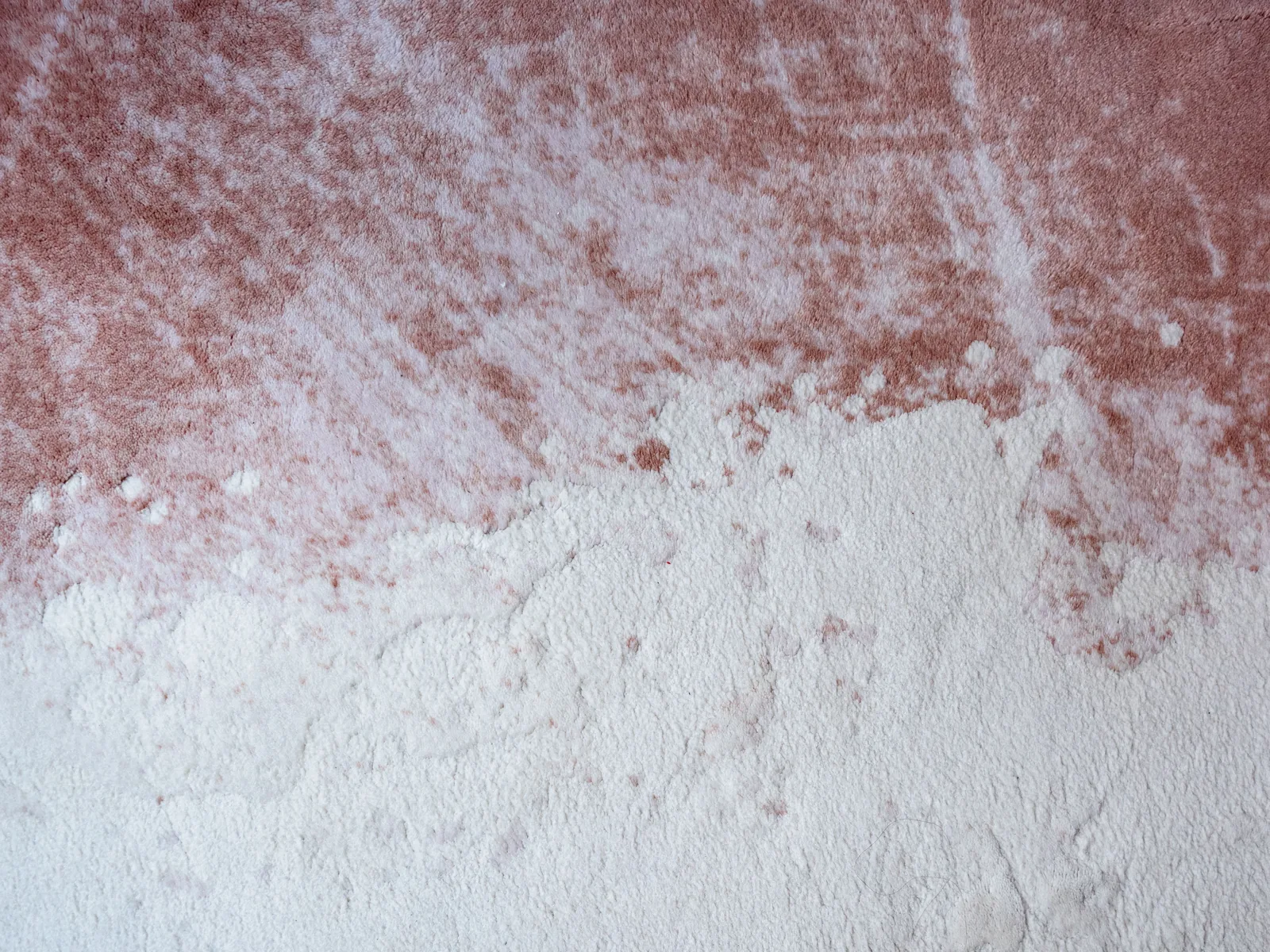
Tape and float is the trade inside the trade. Anyone can put mud on a joint; the work is getting it flat, and flat is built in layers rather than sanded into existence at the end.
Tape, then coats, each one wider than the last, each allowed to dry before the next. Central Texas humidity swings enough that drying times move around, and a coat that has skinned over but is not dry underneath will shrink under the next one and leave a line down the seam.
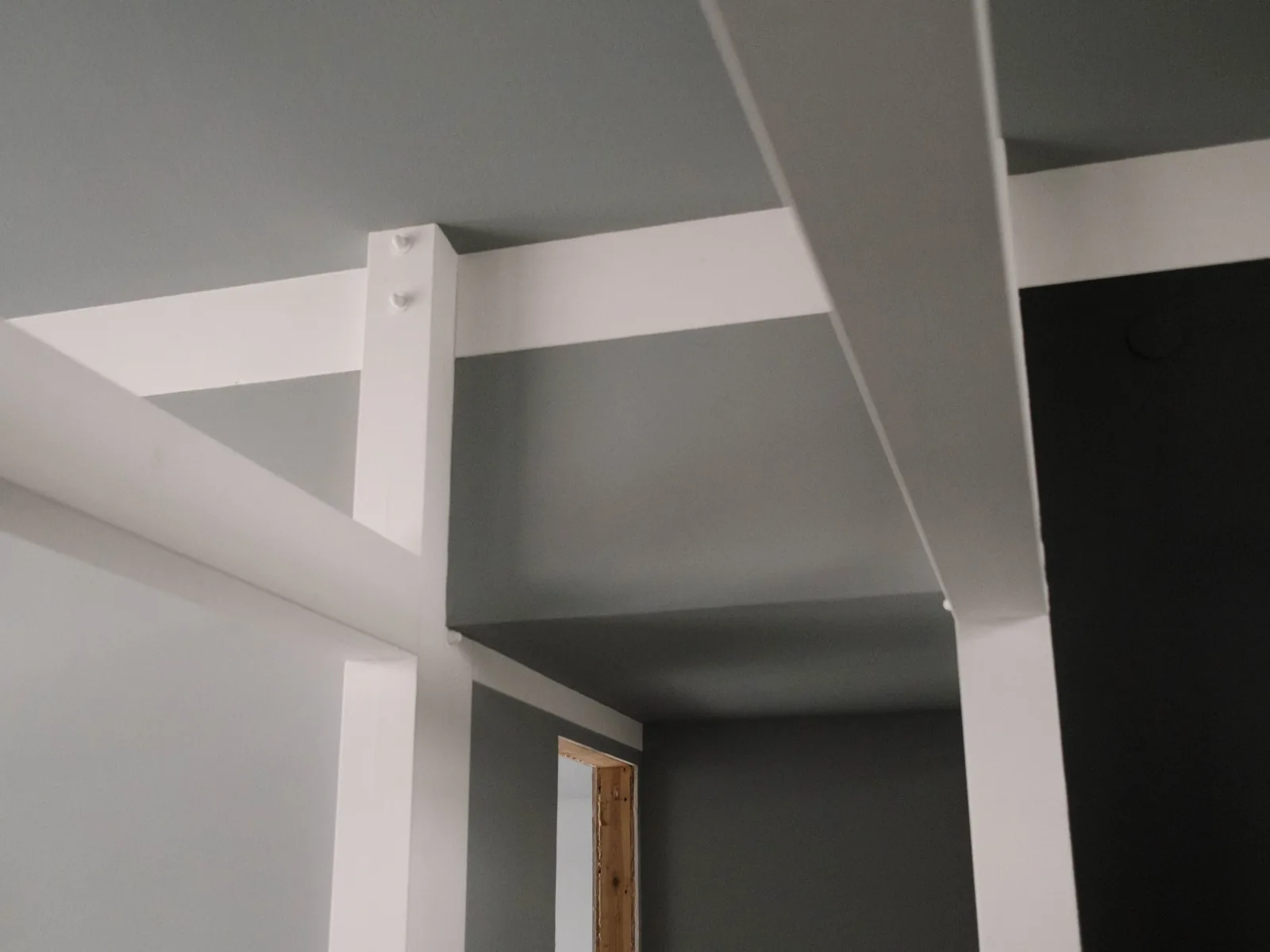
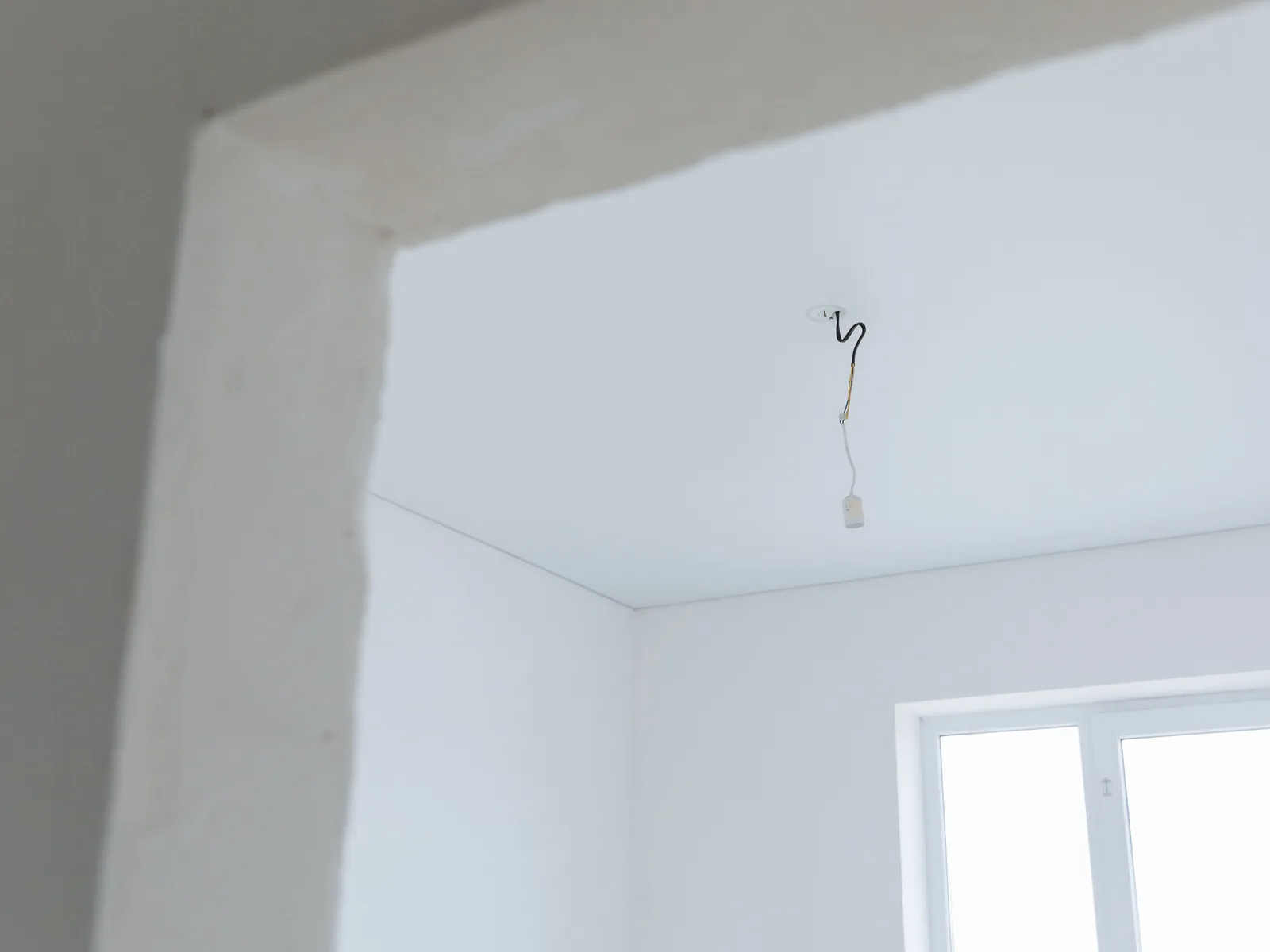
Butt joints get the widest treatment, because there is no factory bevel to hide in and the only way to lose one is to spread it far enough that the eye cannot find the transition. Inside corners are run straight rather than heaped, and outside corners get bead set true — a bowed corner is visible from the far end of a room no matter how well it is coated.
We sand to flat, not to bare paper. Over-sanding raises fuzz on the face, and fuzz takes paint differently from the mud beside it, which is a defect of its own.
Loose screws, torn paper and proud sheets get fixed before the first coat. Covering them just moves the problem to the paint.
Tape is bedded into mud with the excess pulled from under it, so nothing hollow is left to crack later.
Each coat goes on wider than the last and dries before the next. That is the part that cannot be hurried and the part people skip.
We sand flat and then look at the wall the way your windows and fixtures will, from the side, before calling it finished.
Raeford, Fayetteville and the towns around them are not one market — a Fort Bragg rental turning over, a brick ranch off Bragg Boulevard and a new build in Hope Mills are three different jobs.
Tell us what the job is — a whole house, one room, or a hole in a hallway. Send photos on WhatsApp if that is quicker. English or Spanish.
Call (512) 784-0031